
Generic selectors
Exact matches only
Search in title
Search in content
Post Type Selectors
Search in posts
Search in pages

Bone Marrow Transplant Cost in India

Success Rate
99%

Recovery Time
2 week

Hospital Stay
5days

Treatment Type
Surgical

Bone Marrow Transplant Cost in India

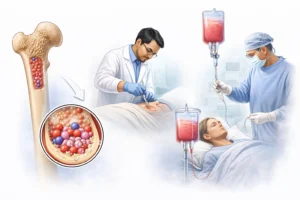
A bone marrow transplant (BMT)—also known as a stem cell transplant—is an advanced medical procedure used to replace diseased or damaged bone marrow with healthy stem cells. These stem cells are essential for producing red blood cells, white blood cells, and platelets, which are critical for oxygen delivery, immunity, and clotting.

India has emerged as a preferred destination for bone marrow transplantation due to its clinical expertise, modern transplant units, and comparatively affordable treatment costs, especially for international patients seeking quality care.

Bone Marrow Transplant Cost in India

The cost of bone marrow transplant in India typically ranges from USD 12,000 to USD 40,000, depending on several clinical and logistical factors. The final expense varies based on the transplant type, hospital infrastructure, donor availability, patient condition, and post-transplant care requirements.

Approximate Cost by Transplant Type

  • Autologous Bone Marrow Transplant: USD 12,000 – USD 24,000
  • Allogeneic Bone Marrow Transplant: USD 24,000 – USD 37,500
  • Umbilical Cord Blood Transplant: USD 12,000 – USD 33,000

These estimates usually include hospitalization, transplant procedures, and immediate post-operative monitoring. Extended recovery or complications may increase the total cost.

Key Factors That Influence Bone Marrow Transplant Cost in India

Several medical and non-medical factors determine the overall expense:

1. Type of Transplant

Autologous transplants (using the patient’s own stem cells) are generally less complex and more economical than allogeneic transplants, which involve donor matching and higher immunological risks.

2. Donor Matching and Availability

A related donor is usually more cost-effective. Unrelated donor searches through international registries can significantly increase expenses.

3. Hospital Selection

Government hospitals tend to be more affordable, while private multi-specialty hospitals may charge more due to advanced infrastructure, isolation units, and specialized transplant teams.

4. Pre- and Post-Transplant Care

Costs may rise due to chemotherapy conditioning, isolation rooms, intensive care, diagnostic tests, and management of complications such as infections or graft-versus-host disease (GVHD).

5. Medications and Blood Products

Immunosuppressive drugs, antibiotics, antivirals, platelet transfusions, and long-term medications contribute to ongoing costs during recovery.

Best Hospitals for Bone Marrow Transplant in India

India is home to several internationally recognized transplant centers offering comprehensive BMT services:

  • Fortis Memorial Research Institute
  • Sanar International Hospital
  • Medanta – The Medicity
  • Indraprastha Apollo Hospital
  • Max Super Speciality Hospital
  • Artemis Hospital
  • BLK Super Speciality Hospital
  • BGS Gleneagles Hospital
  • Kokilaben Dhirubhai Ambani Hospital
  • Gleneagles Global Health City

These hospitals are equipped with advanced transplant units, HEPA-filtered isolation rooms, and multidisciplinary transplant teams.

Leading Bone Marrow Transplant Doctors in India

India’s BMT specialists are globally respected for their experience and clinical outcomes:

  • Rahul Bhargava – Fortis Memorial Research Institute
  • Dharma Chaudhary – Sanar International Hospital
  • Gaurav Kharya – Apollo Hospitals
  • Satya Prakash Yadav – Medanta
  • Dinesh Bhurani – BLK-Max Hospital
  • Lalit Kumar – Artemis Hospital

Conditions Treated with Bone Marrow Transplant

Cancer-Related Conditions

  • Acute and chronic leukemia
  • Hodgkin’s and non-Hodgkin’s lymphoma
  • Multiple myeloma
  • Myelodysplastic syndromes
  • Neuroblastoma

Non-Cancerous Disorders

  • Aplastic anemia
  • Thalassemia
  • Sickle cell disease
  • Inherited immune deficiencies

Other Medical Conditions

  • Myelofibrosis
  • Waldenström macroglobulinemia
  • Certain autoimmune disorders
  • Selected metabolic and genetic diseases

Types of Bone Marrow Transplant

Autologous Transplant

Uses the patient’s own stem cells, collected and stored before high-dose chemotherapy.

Allogeneic Transplant

Uses stem cells from a genetically matched donor. Subtypes include:

  • Matched sibling donor
  • Haplo-identical (half-matched) donor
  • Matched unrelated donor (MUD)

Umbilical Cord Blood Transplant

Uses stem cells collected from a newborn’s umbilical cord. Requires less stringent matching but may involve longer recovery.

Recovery and Success Rate of Bone Marrow Transplant in India

Engraftment usually occurs 10–28 days after transplant, while full recovery may take several months to a year. During this period, patients require close monitoring and infection prevention.

The success rate of bone marrow transplant in India ranges between 60% and 85%, depending on:

  • Underlying disease
  • Patient age and overall health
  • Type of transplant and donor match

India’s combination of clinical outcomes and cost-effectiveness makes it a strong option for eligible patients.

How Sanjivani Care Supports Bone Marrow Transplant Patients

Navigating a complex treatment like BMT can be overwhelming, especially for international patients. Sanjivani Care works as a medical tourism and healthcare facilitation company in India, assisting patients with:

  • Hospital and specialist coordination
  • Treatment planning and cost transparency
  • Medical visa and travel guidance
  • Language and on-ground patient support
  • Post-treatment follow-up coordination

Their role is to simplify the care journey, allowing patients and families to focus on treatment and recovery.

Medical Disclaimer

This content is intended for informational purposes only and does not replace professional medical advice. Treatment decisions should always be made in consultation with a qualified hematologist or transplant specialist.

Our Services for Bone Marrow Transplant

Transparent - Professional - Without Hassles

FAQs

What is Bone Marrow Transplant?

The bone marrow transplant is a process of transplanting blood stem cells inside the bone marrow. The new blood stem cells help replace destroyed or damaged bone marrow.

What is a Robotic Bone Marrow Transplant?

The bone marrow transplant process is done with a computer-controlled robotic arm to perform transplanting procedures for better precision. The surgeon made a tiny incision and used an assisted robotic arm to transplant bone marrow with minimal effort.

What are the types of Bone Marrow Transplant?

There are three types of bone marrow transplants. The treatment procedure will be given based on the donor and receptor.

Autologous Bone Marrow Transplant –The donor is the patient in this case itself. Stem cells will be taken from the patient’s bone marrow and transplanted after treatment.

  • Allogeneic Bone Marrow Treatment

The donor must share a similar genotype with the patient. Stem cells will be taken by apheresis or harvested from genetically matched donors. The donor will be a candidate from a family, such as a brother, sister or any other.

  • Umbilical Cord Blood Transplant

Stem cells are harvested from the umbilical cord after the infant’s delivery. The stem cells then proliferate into mature cells and are transplanted into the receptor.

How much time will it take for a Bone Marrow Transplant in India?

Bone marrow transplant procedure generally takes a few weeks to be completed. After the transplantation, a patient must visit the hospital for three months for follow-up sessions.

Who can get a Bone Marrow Transplant in India?

A patient may need to proceed with a bone marrow transplant in India if they are suffering from below listed health complications such as:

  • Aplastic anemia
  • Lymphoma or leukemia
  • Genetic disorders such as sickle cell disease
  • Immune deficiency

What are the precautions after Bone Marrow Transplant in India?

A patient must follow a neutropenic diet after the bone marrow transplantation. This diet has been provided to the patient because they are immunosuppressed for 100 days after the bone marrow transplant.

What is the Bone Marrow Transplant success rate in India?

India’s bone marrow transplant success rate is around 60-90%. However, the success may depend on the patient’s condition.

What is the Bone Marrow Transplant cost in India?

India’s bone marrow transplant cost is around $300 to $420. India’s bone marrow surgery cost ranges from $18000 to $45000. However, the cost of treatment may vary according to the hospital and treatment facility.

What is robotic surgery cost in India?

India’s bone marrow surgery cost ranges from 15 00,000 to 40 00,000. The actual treatment cost may vary according to the BMT procedure recommended by a doctor.

What are the top 10 best Bone Marrow Transplant hospitals in India?

The top 10 best bone marrow transplant hospitals in India are:

  1. Fortis Hospital, Gurgram
  2. Max Super Specialty Hospital, Delhi
  3. Indraprastha Apollo Hospital, Delhi
  4. Medanta, The Medicity Hospital, Gurgram
  5. Global Hospital, Chennai
  6. Kokilaben Dhirubhai Ambani Hospital, Mumbai
  7. Fortis Malar Hospital, Chennai
  8. KIMS Hospital, Hyderabad
  9. BLK Super Specialty Hospital, Delhi
  10. Gleneagles Global Hospitals, Chennai

What are the top 10 best Bone Marrow Transplant surgeons in India?

The top 10 best bone marrow transplant surgeons in India are:

  1. Gaurav Kharya (Pediatric Haemato-Oncologist)
  2. Nivedita Dhingra (Hemato-Oncologist)
  3. Pravas Chandra Mishra (Hematologist)
  4. Dr Rahul Naithani (Director – Cancer Care / Oncology, Bone Marrow Transplant)
  5. Rahul Bhargava (Hematologist | Director Of Hematology, Pediatric Hematology)
  6. Ruquaya Ahmad Mir (Hematologist)
  7. Ramesh Sarin (Hematologist)
  8. Nandini C. Hazarika (Medical Oncologist, BMT Specialist)
  9. Rakesh Chopra (Hematological Oncology)
  10. Aniruddha Dayama (Hematologist)

How can I apply or get or book an appointment for Bone Marrow Transplant in India?

If you are looking for the best bone marrow transplant hospital in India, we can help you. Visit our official website at alafiyameditour.com. To book a bone marrow transplant appointment in India, complete the inquiry form and mention all your details. Based on the input, we provide the best hospitals and healthcare experts for bone marrow transplant procedures.

  • Is it painful to donate bone marrow during the BMT?

In short, no. This is because doctors provide medicine to the donor so that the bone marrow enters the bloodstream. Then, the blood (approximately one unit) is retrieved from the donor after which doctors take out the bone marrow from the blood.

  • How long will it take to complete the allogeneic bone marrow transplant?

Generally, 1-2 hours are enough to complete the allogeneic bone marrow transplant. However, the patient will experience weakness and soreness for a few days following the transplant.

  • What is the recovery period of BMT?

The recipient can return to his normal life routine within 4-6 weeks of bone marrow transplant.

  • Is BMT – Bone Marrow Transplant a successful procedure?

The bone marrow transplant has a success rate of around 90%. However, a doctor can analyse your health condition and determine if the process is suitable for your needs.


Book An Free Appointment